How to Design an IP65/IP67 Enclosure for Outdoor Electronics
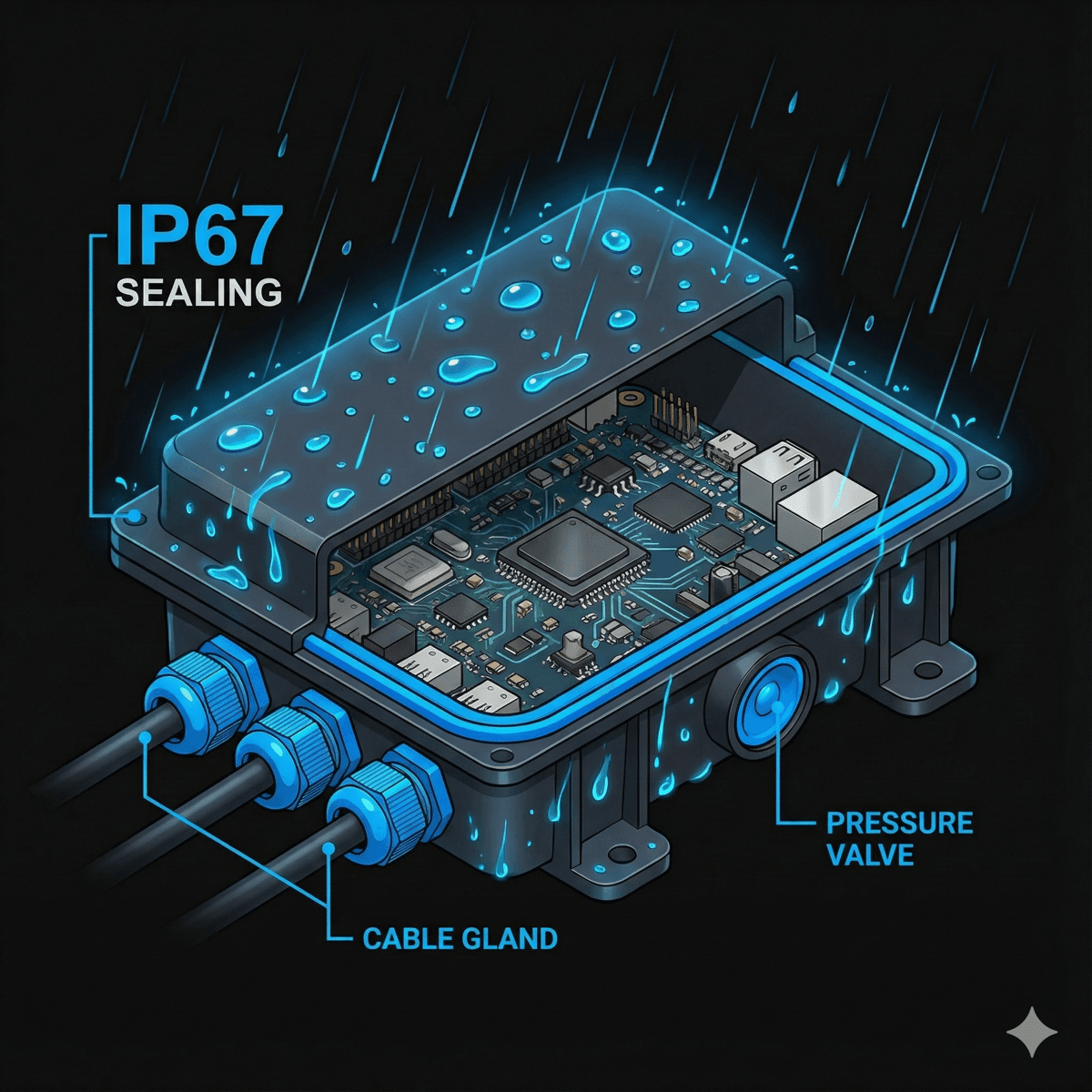
Designing IP65 and IP67 rated enclosures for outdoor power electronics requires systematic attention to sealing, thermal management, and material selection. This guide covers the essential design principles, gasket selection, cable entry design, and testing requirements for achieving reliable environmental protection in demanding applications.
Understanding IP65 vs IP67 Requirements
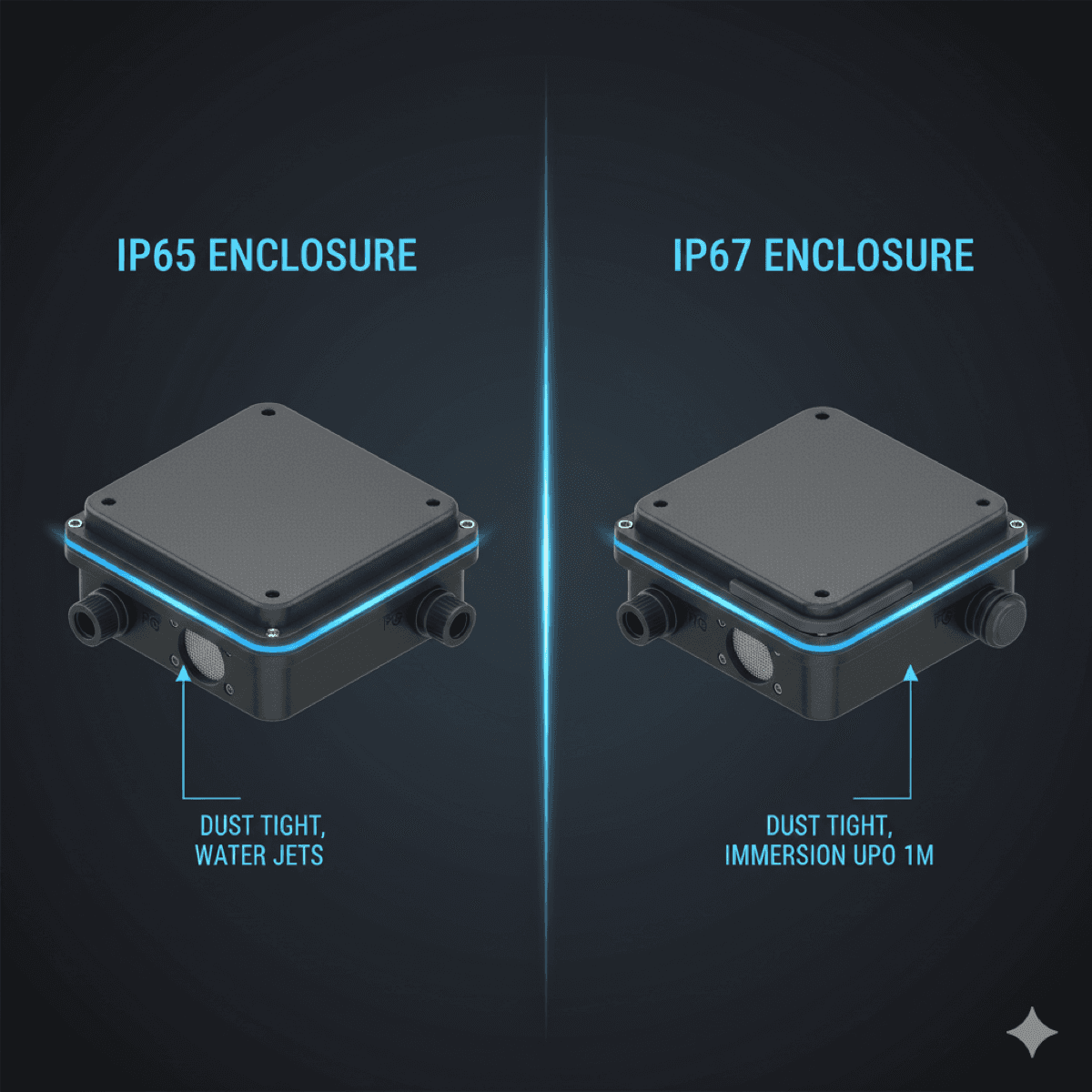
IP (Ingress Protection) ratings define the level of protection an enclosure provides against solid particles and liquids. For outdoor power electronics, IP65 and IP67 are the most common targets.
IP65 Breakdown:
- First digit (6): Dust-tight - No ingress of dust
- Second digit (5): Protected against water jets from any direction
IP67 Breakdown:
- First digit (6): Dust-tight - No ingress of dust
- Second digit (7): Protected against temporary immersion (1m depth, 30 minutes)
Key Differences:
IP65 is suitable for:
- Wall-mounted outdoor equipment
- Covered or semi-protected installations
- Applications with no flooding risk
IP67 is required for:
- Ground-level or below-grade installations
- Areas subject to flooding or standing water
- Equipment that may be submerged during cleaning
- Marine or coastal environments
The jump from IP65 to IP67 significantly increases design complexity. IP67 requires true submersion resistance, not just resistance to water jets. This affects gasket compression, cable entry design, and pressure equalization strategy.
Enclosure Material Selection
Material choice impacts thermal performance, weight, cost, and corrosion resistance.
Aluminum:
- Excellent thermal conductivity (150-200 W/mK)
- Good corrosion resistance (with anodizing or coating)
- Lightweight (2.7 g/cm³)
- Easy to machine, cast, or extrude
- Best for: High-power applications requiring heat dissipation
Stainless Steel (304/316):
- Excellent corrosion resistance
- High strength
- Poor thermal conductivity (15-25 W/mK)
- Heavy (8 g/cm³)
- Best for: Harsh chemical or marine environments
Powder-Coated Steel:
- Lower cost than stainless
- Good EMI shielding
- Requires quality coating for corrosion resistance
- Best for: Indoor or covered outdoor applications
Fiberglass (GRP/FRP):
- Excellent corrosion resistance
- No EMI shielding (can be advantage or disadvantage)
- Good thermal insulation
- UV stable with proper formulation
- Best for: Corrosive environments, electrical isolation requirements
Polycarbonate:
- Transparent options available
- Good impact resistance
- Lower temperature rating than metals
- Best for: Low-power applications, visibility requirements
Wall Thickness Guidelines:
- Aluminum: 2-4mm for typical enclosures
- Steel: 1.5-3mm
- Stainless: 1.5-2.5mm
- Fiberglass: 3-6mm
- Polycarbonate: 3-5mm
Gasket Design and Selection
Gaskets are the primary barrier against water and dust ingress. Proper gasket design is essential for achieving IP65/IP67.
Gasket Materials:
EPDM (Ethylene Propylene Diene Monomer):
- Temperature range: -40°C to +120°C
- Excellent weather/ozone resistance
- Good water resistance
- Most common choice for outdoor enclosures
Silicone:
- Temperature range: -60°C to +200°C
- Excellent flexibility at low temperatures
- Higher cost than EPDM
- Best for extreme temperature applications
Neoprene:
- Good oil and fuel resistance
- Temperature range: -30°C to +100°C
- Best where oil exposure is expected
Gasket Profiles:
Solid Rectangle:
- Simple, economical
- Requires precise groove depth control
- Compression: 15-25% of original height
D-Profile:
- Self-locating in groove
- Easier installation
- Good for long runs
O-Ring:
- Highest sealing pressure per unit compression
- Requires machined groove
- Best for critical seals
Hollow/Sponge:
- Lower compression force required
- Better conformance to surface irregularities
- Less consistent seal under varying conditions
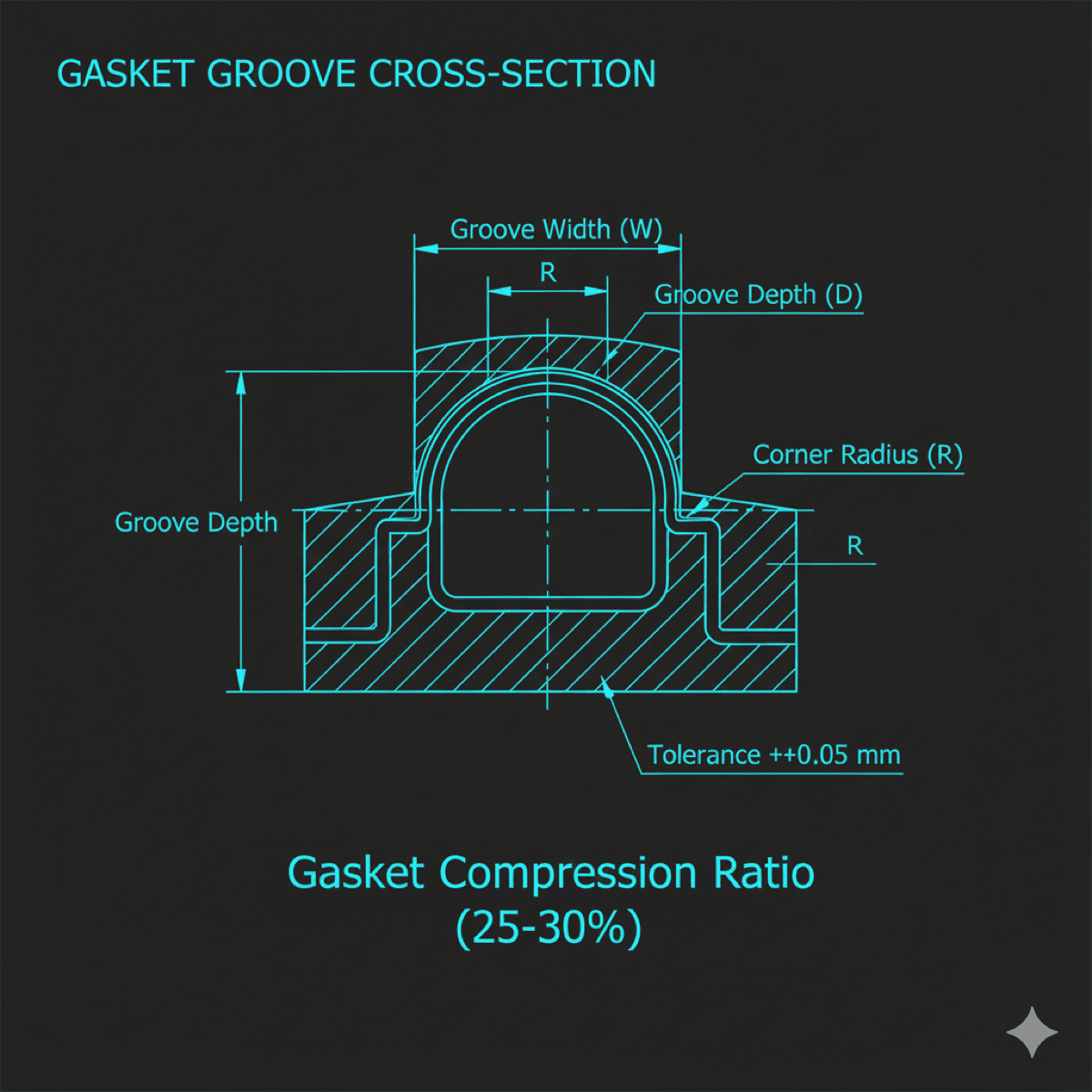
Design Parameters:
Groove Depth: 70-85% of uncompressed gasket height Groove Width: 110-130% of gasket width (solid), 150% (hollow) Corner Radii: Minimum 3mm internal radius Surface Finish: Ra 3.2μm (125 μin) or better Compression: 15-25% for solid, 25-40% for hollow
Common Mistakes:
- Insufficient gasket compression (seepage)
- Over-compression (gasket damage, lid distortion)
- Sharp corners that cut gasket
- Contaminated sealing surfaces
- Missing gasket at corners during assembly
Cable Entry Design
Cable entries are the most common failure point in IP-rated enclosures. Proper design and specification are critical.
Cable Gland Selection:
For IP65:
- Standard compression glands adequate
- Nylon or metal body options
- Must match cable diameter range
For IP67:
- Use glands rated IP68 (provides margin)
- Consider double-seal designs
- Metal glands preferred for durability
Key Specifications:
- Clamping range: Cable OD ±1-2mm
- Temperature rating matching application
- Material compatible with environment
- Thread standard (metric, PG, NPT)
Multi-Cable Entries:
For multiple small cables, options include:
- Individual glands (most secure)
- Multi-hole inserts in larger gland
- Cable entry systems with modular seals
Unused Entries:
- Always install blanking plugs
- Use same IP rating as glands
- Don't leave entries "for future use" unsealed
Strain Relief:
- All cable glands should provide strain relief
- Prevents cable pullout and seal damage
- Critical for vibrating environments
Conduit Entries:
- Use IP-rated conduit fittings
- Seal inside of conduit to prevent water migration
- Consider drain points at low spots
Best Practices:
- Locate entries on bottom or sides, never top
- Use drip loops on cables entering from above
- Allow proper bending radius inside enclosure
- Label cable entries for maintenance
- Test with actual cables, not just glands
Pressure Equalization
Sealed enclosures experience pressure differentials due to temperature changes and altitude variations. Without pressure equalization, these differentials can:
- Force water past seals during pressure drops
- Stress enclosure walls and windows
- Make doors/lids difficult to open
Pressure Differential Calculation:
ΔP = P₀ × (T₂ - T₁) / T₁
For a 50°C temperature swing (0°C to 50°C): ΔP ≈ 0.18 bar (2.6 psi)
This is enough to deform panels and compromise seals.
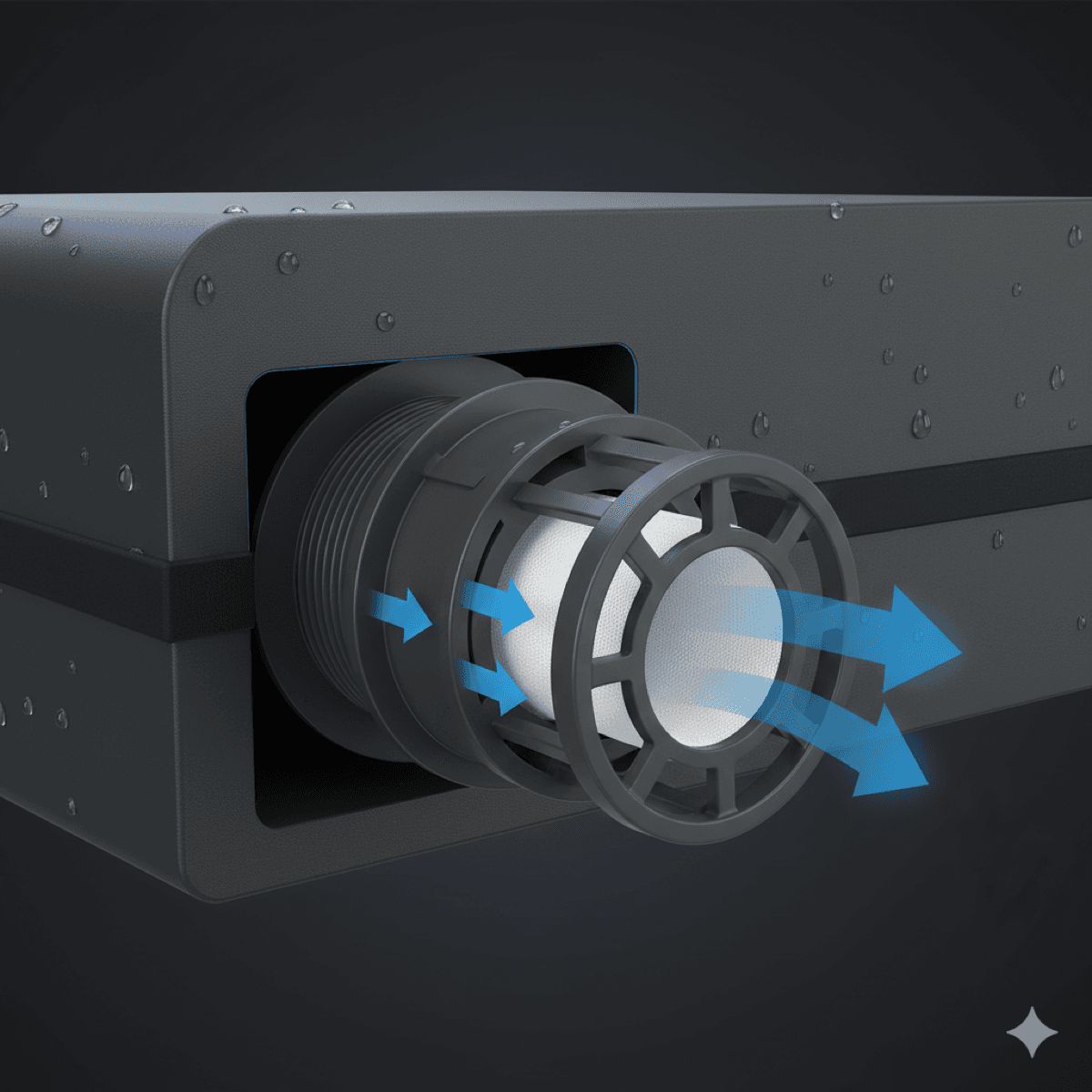
Pressure Equalization Vents:
ePTFE (Gore-Tex) Vents:
- Allow air/gas to pass while blocking water
- Water entry pressure (WEP) ratings from 0.02 to 1+ bar
- Choose WEP exceeding expected water pressure
- Available in various airflow ratings
- Most common solution for IP67
Sintered Plastic/Metal:
- More robust than membrane vents
- Lower airflow rates
- Good for dusty environments
Breather Plugs:
- Combine vent and drain functions
- Good for bottom-mounted applications
- May allow limited water ingress
Sizing Considerations:
Airflow requirement depends on:
- Enclosure volume
- Rate of temperature change
- Desired pressure differential limit
Rule of thumb: 100cm³ enclosure volume needs approximately 1 cm³/min airflow to limit ΔP to 0.01 bar during 1°C/min temperature change.
Vent Placement:
- Mount high on enclosure (heat rises)
- Protect from direct water spray
- Ensure vent is accessible for inspection
- Consider using protective cover/shield
Testing and Validation
Before committing to production, validate IP rating through testing.
Pre-Production Testing:
Water Spray Test (DIY):
- Use garden hose with adjustable nozzle
- Spray from 3m distance at all angles
- Inspect interior for any water ingress
- Documents weak points before formal testing
Submersion Test (IP67):
- Submerge in water tank at 1m depth
- Maintain for 30 minutes
- Inspect for any water ingress
- Apply slight internal vacuum to check seals
Formal IP Testing (IEC 60529):
IP65 Water Test:
- 6.3mm nozzle at 12.5 L/min
- 2.5-3m distance
- 3 minutes per square meter of surface
- No harmful water ingress permitted
IP67 Immersion Test:
- 1m water depth above lowest point
- 30 minute duration
- No water ingress permitted
Documentation Required:
- Test laboratory accreditation
- Test report with photos
- Product configuration details
- Certificate of conformity
Production Validation:
Sample Testing:
- Test first articles from each production batch
- Verify gasket compression with go/no-go gauges
- Check cable gland torque
Process Controls:
- Torque specifications for fasteners
- Gasket installation work instructions
- Cable gland installation procedures
- Visual inspection checklists
Failure Analysis:
If testing fails:
- Document failure location precisely
- Identify root cause (gasket, fit, damage)
- Implement corrective action
- Re-test to verify fix
- Update production procedures
Free Resource: Download our Sheet Metal Design Rules for comprehensive DFM guidelines that complement this IP-rated enclosure design guide.