How to Prevent Thermal Runaway in Battery Pack Design
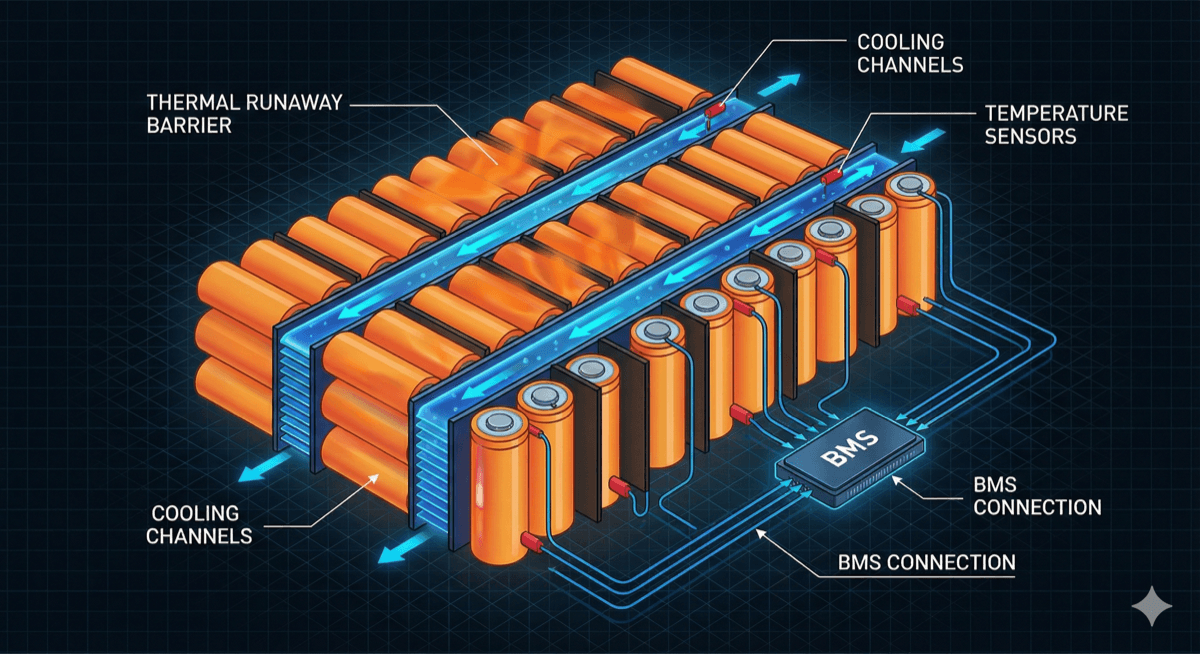
Thermal runaway in lithium-ion batteries is one of the most critical safety challenges in energy storage design. When a cell enters thermal runaway, internal temperatures can exceed 800°C, potentially propagating to adjacent cells and causing catastrophic pack failure. Understanding the mechanisms and implementing proper thermal design is essential for safe battery systems.
Understanding Thermal Runaway
Thermal runaway is a self-accelerating chain reaction where heat generation exceeds heat dissipation, leading to uncontrolled temperature rise. The process typically follows these stages:
Stage 1 - Onset (80-120°C): SEI (Solid Electrolyte Interface) layer begins decomposing, releasing heat. Cell starts generating heat faster than it can dissipate.
Stage 2 - Acceleration (120-150°C): Electrolyte begins decomposing. Separator may melt, potentially causing internal short circuit. Heat generation accelerates exponentially.
Stage 3 - Runaway (150-250°C): Cathode decomposition releases oxygen. Electrolyte combustion occurs. Thermal runaway is now unstoppable.
Stage 4 - Propagation (250°C+): Cell vents violently, potentially with flames. Heat and ejecta can trigger adjacent cells. Pack-level failure ensues if propagation occurs.
The key design goal is preventing Stage 1 initiation and stopping propagation if runaway occurs.
Prevention: Keeping Cells Cool
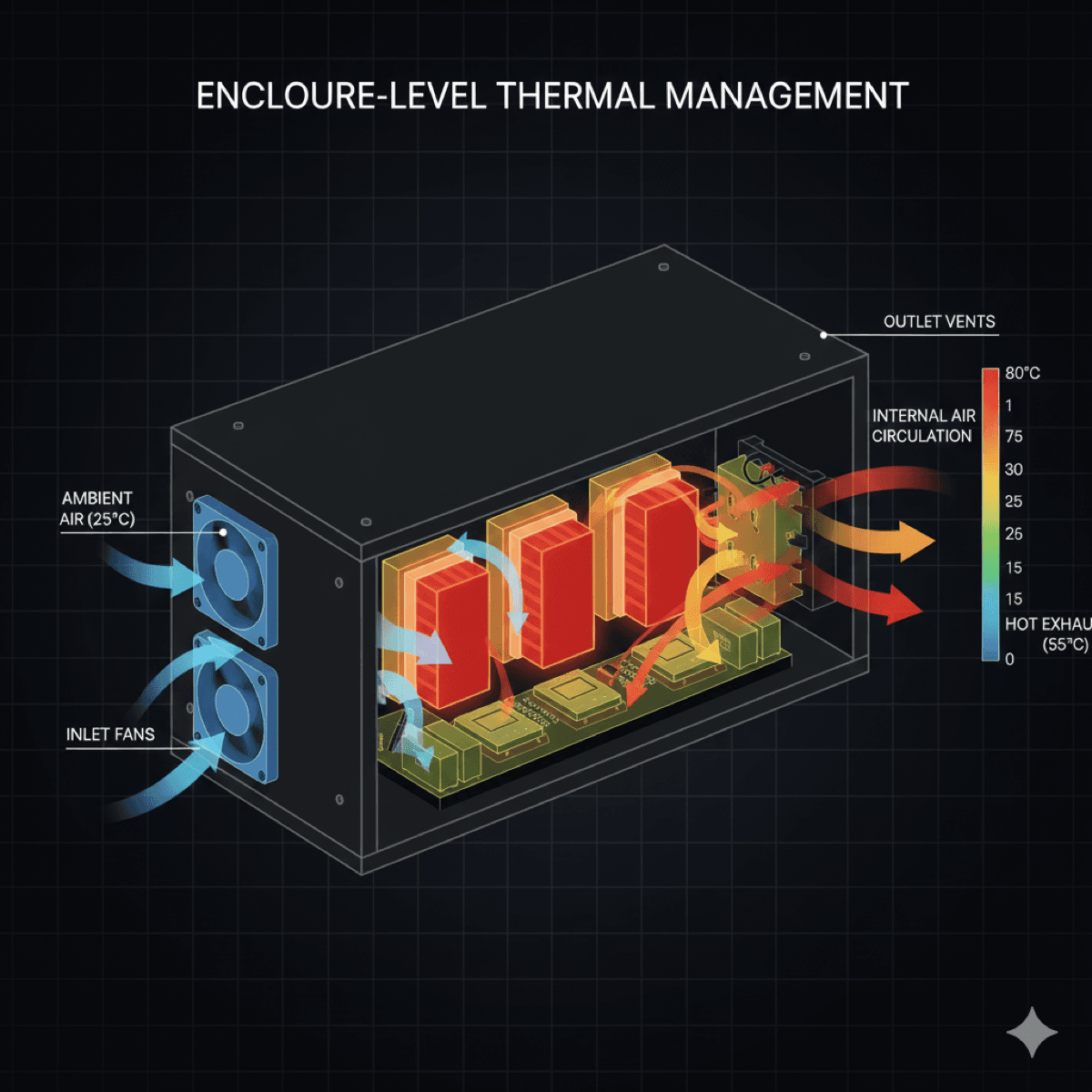
Temperature Limits: Most Li-ion cells should operate between 15-35°C for optimal performance and life. Maximum operating temperature is typically 45-60°C depending on chemistry. Design cooling systems to maintain these limits under worst-case conditions.
Uniform Temperature Distribution: Temperature variations across the pack cause capacity imbalance and accelerated aging. Design for ΔT < 5°C across the pack.
Cooling System Sizing: Calculate heat generation from:
- I²R losses during charge/discharge
- Entropy-based reversible heat
- Contact and interconnect resistance losses
Size cooling capacity for maximum continuous load plus margin for aging and degradation.
Cooling Approaches:
- Air cooling: Simple, low cost. Limited to ~3C discharge rates.
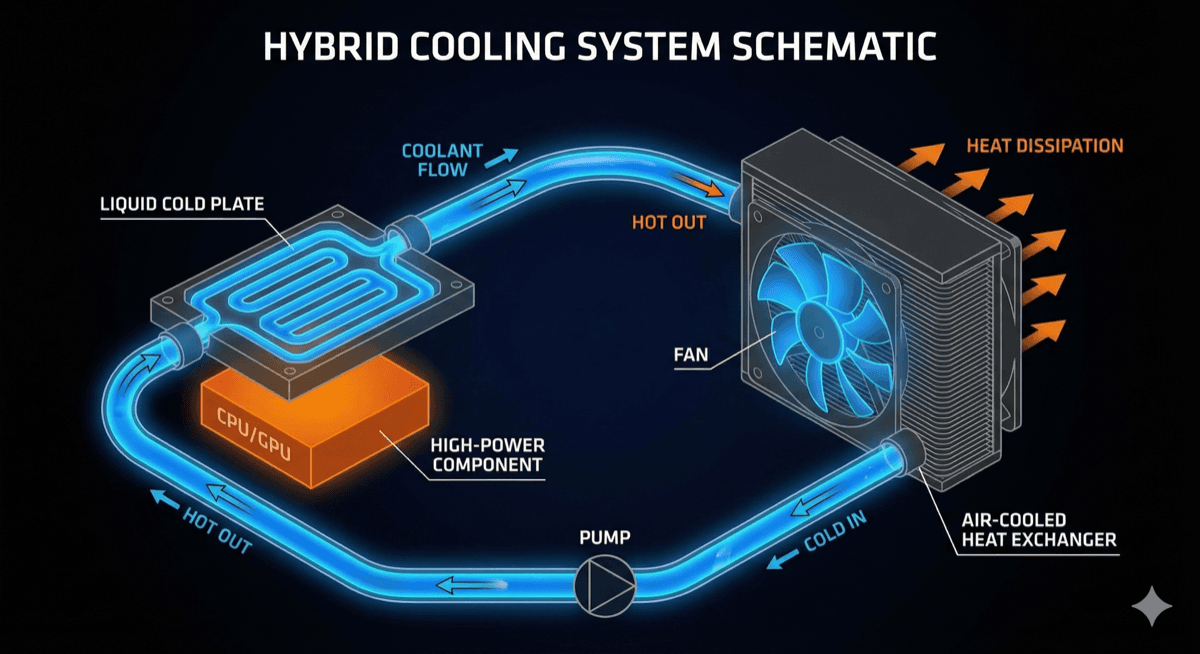
- Liquid cooling: Higher capacity, better uniformity. Standard for EV packs.
- Phase change materials: Passive thermal buffer for transient loads.
- Refrigerant: Maximum cooling capacity for extreme applications.
Detection and BMS Integration
Temperature Monitoring: Place NTC thermistors at multiple locations:
- Every 10-20 cells minimum
- Highest expected temperature locations (center of module, near busbars)
- Inlet and outlet of cooling fluid
Response time is critical—use low-thermal-mass sensors bonded directly to cells.
BMS Response Thresholds:
- 45°C: Reduce charge/discharge rate
- 50°C: Warning to user, further rate reduction
- 55°C: Emergency disconnect, active cooling maximum
- 60°C: Complete shutdown, safety venting preparation
Rate of Rise Detection: Monitor dT/dt. Normal cells show gradual temperature changes. Rapid rise (>1°C/second) may indicate internal fault or external heating—trigger investigation.
Cell Voltage Monitoring: Internal short circuits cause voltage drop before temperature rise. Monitor individual cell voltages for anomalies. Voltage drop with temperature rise is a strong runaway indicator.
Propagation Prevention
Even with prevention measures, assume a cell may enter thermal runaway and design to stop propagation.
Cell Spacing: Air gaps between cells provide thermal resistance and time for detection/response. 2-3mm minimum gap recommended. Larger gaps reduce energy density but improve safety margins.
Thermal Barriers: Intumescent materials or ceramic blankets between cells/modules expand when heated to provide additional insulation. Can delay propagation by 5-15 minutes per barrier.
Vent Path Design: Runaway cells vent hot gases (up to 1000°C). Provide clear vent paths directing ejecta away from:
- Other cells
- Electronics and wiring
- Passengers/operators
Vent pathways should have fire-resistant materials and may require active suppression.
Module Isolation: Design pack in modules that can be isolated. If one module experiences runaway, others can be protected by:
- Physical barriers
- Thermal isolation
- Independent cooling circuits
Material and Construction Choices
Cell Chemistry: LFP (Lithium Iron Phosphate) has significantly higher thermal stability than NMC or NCA. Consider LFP for stationary storage where energy density is less critical than safety.
Cell Format:
- Cylindrical: Easiest thermal management, standardized safety features
- Prismatic: Higher density, but thermal non-uniformity can be problematic
- Pouch: Best form factor flexibility, but require external compression and have weaker containment
Structural Materials: Pack enclosures should be fire-rated. Steel or aluminum with ceramic coatings. Avoid plastics near high-energy cells unless fire-rated grades.
Interconnects: Busbars generate heat at cell connections. Size for low temperature rise. Use materials with high melting points—copper with nickel plating is standard.
Insulation: High-voltage insulation must maintain integrity at elevated temperatures. Silicone, polyimide, or ceramic materials rated for 200°C+ provide margin.
Testing and Validation
Cell-Level Abuse Testing: Verify cell behavior under:
- Overcharge: Charge beyond SOC limits
- Over-discharge: Discharge below minimum voltage
- External short circuit: Low-resistance fault
- Mechanical abuse: Crush, nail penetration
- Thermal abuse: External heating to trigger runaway
Module-Level Propagation Testing: Intentionally trigger runaway in one cell (typically via nail penetration or heater) and verify:
- Detection system responds appropriately
- Propagation does not occur (or is delayed adequately)
- Vent gases are managed safely
Pack-Level Validation: Full thermal characterization under operating conditions:
- Temperature distribution during charge/discharge cycles
- Cooling system performance at extremes
- BMS response verification
Standards Compliance: UN38.3: Transportation safety UL 2580: EV battery safety IEC 62619: Stationary storage safety
Work with certified test laboratories for formal compliance testing.